Main Street
Did you know that we have an award-winning plan in place for our Main Street? I am proud to have been a part of the creation of this plan from its beginnings. One of my major goals as a city councilwoman will be to see the plan to its completion and encourage the positive redevelopment of this area.
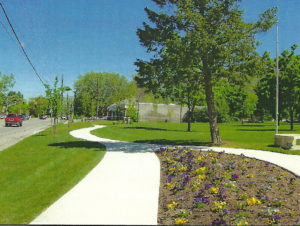
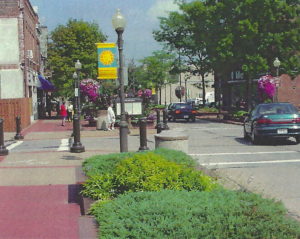
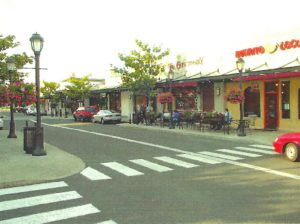
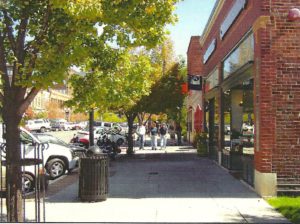
Changes made to our Main Street can positively increase our sense of community and the feeling of pride and involvement we have in our town. I compare the planning of a city to the planning of a home… Different rooms with different purposes are needed for the place to be livable and complete. Our Main Street is like our family room, the space where everyone gathers and visits. We already have many traditions on our Main Street… the Pumpkin Walk, Festival of Lights, Easter egg hunt and our wonderful 4th of July festivities. We have a historical museum that has recently seen an amazing transformation and increased activity. The popularity of Movies in the Park keeps growing, our Community Garden is bountiful, and now we even have our own Farmer’s Market! As our Main Street is redeveloped according to the plan that is in place, this feeling of community will increase as it becomes a more inviting place for us to walk, bike, wait for a ride on the bus, eat, shop, live, grow food, and enjoy our small town together …
Details
Question: Is the Main Street Plan tied to a rail system on our Main Street?
Answer: No.
The Main Street Plan was developed independently and has no ties to or reliance on increased transit. There has been much confusion on this issue because the changes to our Main Street ordinances occurred around the same time as a separate study conducted by Utah Transit Authority (UTA) with all of South Davis County.
Question: Does the Main Street Plan include very tall, solid lengths of buildings, like the Village on Main (SW corner of Pages and Main) in Bountiful?
Answer: No.
There are numerous controls in place that would prohibit anything at all like those buildings. The ordinance is specifically written to encourage an organic, old-town-main-street feel. In fact, the core areas of Main Street from the north side of Pages Lane to the south side of Parrish Lane are limited to 35 feet in height on the west side of the street (the same height that is allowed for any home in the city) and 25 feet on the east side of the street (lower than the height allowed for a home). To discourage buildings with very large footprints, the number of office/residential units allowed is calculated per building instead of the traditional per acre and is very small.
Question: Is the Main Street Plan going to make us feel like just another city, and not be distinctively Centerville?
Answer: No.
This planning process was months long and many layers thick, with the intent of making sure it was uniquely Centerville. Later, it was revisited again to get additional public input on the plan. An important element of the plan that makes it so uniquely Centerville is that it is broken up in districts that respect the framework and character we already have in place.
Question: Is the purpose of the Main Street Plan to encourage “high density housing” in Centerville?
Anwer: No.
This is a plan based on “mixed use development” which through history is the way towns traditionally developed their core. The benefits are many, and are clearly stated in our general plan’s #1 stated purpose for the Main Street Plan:
Promote the South Main Street Corridor as the cultural, civic, and community heart of Centerville by providing a careful balance of land uses, which serve residents, businesses, and visitors.
Mixed use gives greater flexibility for development of uses that will actually be desired and supported by the community. There are many different options for how each property might look. The primary use would be along the street and would be a commercial/retail/service use. Additional space could be either on an additional floor, behind the street-facing space, or to the side of the primary use. The additional use would be either residential or office space. The number of office space or residential units allowed per building is also very small (1-4 allowed per building, 5-8 with conditional use permit), so worries about our Main Street being overrun with “high density housing” are unfounded. These options are good for filling the needs of the community and enable the property owner’s ability to succeed in his/her redevelopment endeavor. Also, these changes happen when the property owner feels ready to make changes… property owners are not in any way forced to change their current uses.